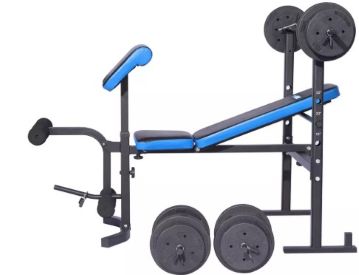




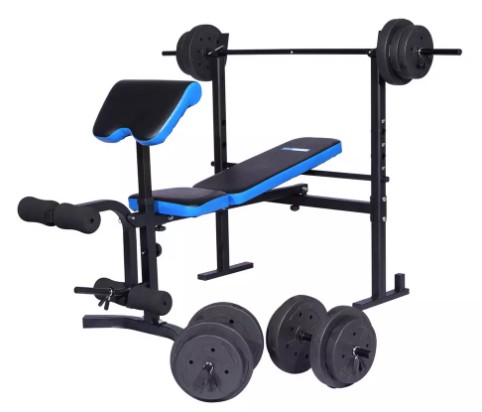
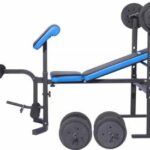
Read the Pro Fitness Weight Bench with Weights manual guide covering assembly instructions, safety tips, weight limits, and workout advice for safe home training.
Manual Overview
If you’ve recently purchased the Pro Fitness Weight Bench with Weights, understanding the manual and safety guidelines is essential before starting your workouts. Proper assembly, correct usage, and following recommended weight limits will help ensure both safety and performance while training at home. This guide summarises the key information from the Pro Fitness manual, including assembly tips, safety precautions, workout area requirements, and basic exercise guidance. Whether you’re new to strength training or returning to regular workouts, these instructions will help you set up your bench correctly and use it safely. By following the manufacturer’s recommendations, you can reduce the risk of injury, extend the life of your equipment, and get the most out of your home gym setup.
Assembly Guidelines
To ensure the equipment is installed safely and functions correctly, follow these assembly recommendations
- The product must be installed on a stable, level surface to prevent movement during exercise.
- Assemble the equipment as close to its final position as possible, ideally in the same room where it will be used.
- Ensure you have sufficient space to lay out all parts before starting assembly.
- Keep children and animals away during assembly, as small parts may present a choking hazard.
- Dispose of all packaging materials responsibly once assembly is complete.
- Check that all components and tools listed in the parts list are included. Some parts may arrive pre-assembled to simplify setup.
- For best results and safety, two people are recommended for assembly.

Safe Use Guidelines
- The owner of the equipment is responsible for ensuring that all users understand how to use the product safely.
- This equipment is designed for domestic use only and should not be used in commercial, rental, or institutional environments.
- Only use the product for its intended purpose, as described in the manual.
- Keep the equipment indoors and away from moisture, dust, or water sources.
- Avoid placing the equipment in garages, outdoor buildings, covered patios, or damp environments, as moisture can cause corrosion and damage.
- Ensure unsupervised children are kept away from the equipment at all times.
- Individuals with disabilities should only use the equipment with supervision from a qualified professional or doctor.
- Always wear appropriate workout clothing and trainers. Avoid loose or baggy clothing that could become caught in moving parts.
- Do not place sharp objects near the equipment.
- Keep hands away from moving components during operation.
- Ensure adjustment devices are fully secured and not protruding, as they could interfere with movement.
- Perform stretching exercises before workouts to properly warm up.
- Only one person should use the equipment at a time.
- Using a spotter during certain exercises is recommended for additional safety.
- If you experience dizziness, nausea, chest pain, or unusual symptoms, stop exercising immediately and seek medical attention.
- Incorrect or excessive training may result in injury or health issues.
Weight Limits and Specifications
To maintain safety and equipment longevity, do not exceed the following limits
- Maximum user weight: 110 kg
- Maximum load on uprights: 50 kg (including bar and weights)
- Maximum load on leg developer: 35 kg
- Maximum barbell training mass: 50 kg
- Maximum weight per dumbbell bar: 20 kg
- Compatible with 1" weight plates
- The product complies with BS EN ISO 20957-1 and 20957-4 Class (H) – Home Use standards.

Medical Warning
Before beginning any exercise program, consult your doctor, especially if you are over 35 years old, have pre-existing medical conditions, or have been inactive for a long period.
Workout Area Requirements
For safety, ensure there is adequate space around the equipment.
- The free area surrounding the equipment should be at least 0.6 metres larger than the training area.
- This space allows users to dismount safely in case of an emergency.
- When multiple pieces of equipment are placed side by side, the free area may be shared.
Exercise Information - Getting Started
If you have not exercised for a long time or are overweight, begin slowly and increase your workout duration gradually.
- Start with short sessions, increasing time by a few minutes each workout.
- Aerobic fitness typically improves within 6–8 weeks of consistent training.
- Exercise at your own pace and focus on gradual improvement.
Important reminders
- Have your doctor review your training and diet plans before starting.
- Set realistic fitness goals.
- Monitor your heart rate regularly.
- Always position your equipment on a flat and stable surface with enough space around it.
Exercise Intensity
To maximise exercise benefits, training intensity should be monitored using heart rate.
Effective aerobic exercise occurs when your heart rate is between 65% and 85% of your maximum heart rate. During the first few months of training, keep your heart rate toward the lower end of the target zone.
Gradually increase intensity as your fitness improves.
Measuring Your Heart Rate
- Stop exercising but keep moving slowly.
- Place two fingers on your wrist to locate your pulse.
- Count heartbeats for 6 seconds.
- Multiply that number by 10 to determine beats per minute.
- Example 14 beats in 6 seconds × 10 = 140 BPM.
- Adjust exercise intensity to remain within your target heart rate zone.
Aerobic Exercise
Aerobic exercise strengthens the heart and lungs, which are essential for overall health. Activities that involve large muscle groups, such as the legs, arms, and glutes, help improve cardiovascular fitness and endurance.
Weight Training
Weight training is an important part of a balanced exercise program - Benefits include
- Building muscle strength
- Improving muscle tone
- Supporting fat loss
- Enhancing overall physical performance
- If your heart rate exceeds your target zone, consider performing fewer repetitions or lowering the weight.
Structuring Your Workout
Each workout should include three key stages
1, Warm-Up (5–10 minutes)
- Light exercise and stretching
- Gradually increases heart rate and circulation
- Prepares muscles for training
2, Training Zone Exercise (20–30 minutes)
- Exercise while maintaining your target heart rate zone
- Beginners should limit this stage to 20 minutes initially
3, Cool-Down (5–10 minutes)
- Gentle stretching
- Helps reduce muscle soreness
- Improves flexibility
- Exercise Frequency
For best results perform three workouts per week with at least one rest day between sessions. After several months of regular training, you may increase to up to five workouts per week if desired.
The most important factor is consistency. Making exercise a regular and enjoyable part of your routine will deliver the best long-term fitness results.
Related posts:
 Cheap Weight Benches UK – Best Value
 Best 7 Value Weight Benches UK 2025
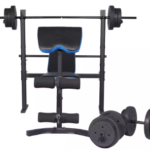 Pro Fitness Folding Workout Bench – Save £50
 Finer Form Gym Bench Sale – Save £61
 Yoleo Foldable Weight Bench Sale – Now Under £70
 Finer Form Multi Gym Bench Sale – Under £140
 Best 5 Weight Benches Under £200 2026
 Pro Fitness Workout Weight Bench Reviews 2026 ⭐⭐⭐⭐⭐
Recent Comments